
Mechanisms Behind Bronchogen’s Anti-Inflammatory Effects Researchers study Bronchogen as a peptide complex that influences inflammation at the cellular level in

Research into AMPK and diabetes focuses on how AMPK acts as a key regulator of energy balance inside cells. AMPK is activated when cells sense low energy, as reflected in an increase in the AMP:ATP ratio. This activation stimulates glucose uptake and fatty acid oxidation to restore energy levels. Such processes are important for controlling glucose metabolism in tissues involved in diabetes.
When AMPK is activated, it improves insulin sensitivity in skeletal muscle, liver, and adipose tissue by increasing the trafficking of glucose transporter proteins, such as GLUT4, to the cell surface. This effect supports more efficient glucose entry into cells and may lower blood glucose levels. Activating AMPK also plays a role in controlling whole-body glucose homeostasis, which researchers link to improved insulin response in type 2 diabetes models.
Explore AMPK from Direct Peptides Belgium, a research compound widely studied for its role in cellular energy sensing and metabolic regulation pathways.

Research demonstrates that AMPK drives glucose uptake by mobilizing GLUT4 transporters to the cell surface. This creates a vital, insulin-independent route for glucose entry into muscle and fat cells, which is particularly significant for bypassing impaired insulin signaling.
The process begins when AMPK triggers the phosphorylation of downstream regulators such as AS160 and TBC1D1. This biochemical shift, along with the activation of actin-associated proteins like Tmod3, allows GLUT4 vesicles to fuse with the plasma membrane. Laboratory activators like AICAR effectively mimic the physiological effects of exercise by activating this pathway, thereby increasing glucose uptake through both GLUT4 recruitment and p38 MAPK signaling.
Because AMPK provides this functional alternative to traditional insulin pathways, researchers consider its activation a primary mechanism for restoring glucose control and improving insulin sensitivity in type 2 diabetes models.
Yes. Research shows that AMPK activation helps lower blood sugar in type 2 diabetes models by improving how the body manages glucose. AMPK functions as a cellular energy sensor that activates pathways to increase glucose use inside cells. At the same time, AMPK reduces excess glucose release from the liver. Together, these actions support better glucose control.
Belgium Studies demonstrate that AMPK activation increases glucose uptake in skeletal muscle through insulin-independent pathways. This mechanism allows glucose to enter cells even when insulin signaling remains impaired, which represents a central issue in type 2 diabetes. This effect explains why AMPK and diabetes research often focuses on muscle glucose handling.
Laboratory and animal studies also show that AMPK activation suppresses hepatic glucose production. By limiting glucose output from the liver and improving peripheral glucose uptake, AMPK remains a key target in diabetes research when insulin alone does not adequately control blood sugar.
Research on AMPK and Diabetes also explores peptides that relate to insulin sensitivity through distinct metabolic pathways. These peptides appear in scientific discussions as separate research targets alongside AMPK.
Discover MOTS-C from Direct Peptides Belgium, a mitochondrial-derived research peptide investigated for its involvement in metabolic balance and insulin sensitivity mechanisms.

MOTS-C is a mitochondrial-derived peptide that research shows can improve insulin sensitivity and metabolic balance. It originates from a short open reading frame in mitochondrial DNA and increases AMPK activity through metabolic signaling.
Animal studies demonstrate that MOTS-C increases insulin sensitivity in skeletal muscle, especially in mice fed a high-fat diet. MOTS-C treatment in these models reduces insulin resistance, enhances glucose uptake in muscle tissue, and improves glucose homeostasis.
Belgium Research also shows that MOTS-C enhances metabolic flexibility and may improve insulin response by acting through AMPK-linked pathways that regulate energy and glucose metabolism. These effects make MOTS-C an important peptide in metabolic research related to type 2 diabetes.
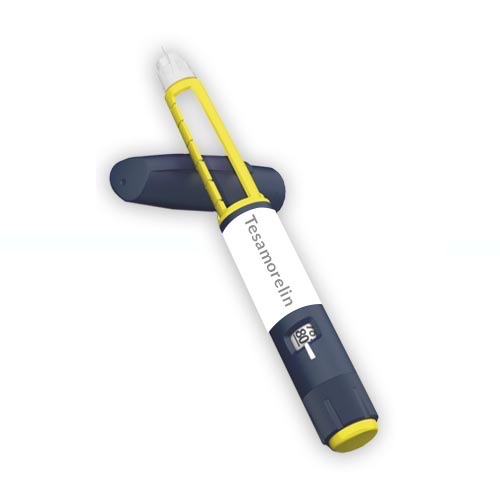
Tesamorelin is a synthetic analogue of growth hormone-releasing hormone (GHRH) that stimulates the release of endogenous growth hormone. It acts on GHRH receptors and increases insulin-like growth factor-1 (IGF-1) levels, which influence metabolic processes, including fat metabolism.
Clinical research shows that tesamorelin consistently reduces visceral adipose tissue (VAT) in study participants, especially those with excess abdominal fat. Reducing VAT has been associated with improvements in some metabolic biomarkers such as triglyceride levels and liver enzyme profiles.
However, evidence from randomized trials in type 2 diabetic patients treated with tesamorelin for 12 weeks showed no significant improvement in insulin sensitivity or glycemic control. These findings indicate that while tesamorelin affects fat distribution, it does not directly enhance insulin sensitivity in the same manner as AMPK activators.
Shop Tesamorelin from Direct Peptides Belgium, a synthetic GHRH analogue used in research to study growth hormone signaling and metabolic regulation.
| AMPK | MOTS-C | Tesamorelin |
|---|---|---|
| Cellular energy-sensing kinase that regulates metabolic balance | Mitochondrial-derived peptide involved in metabolic signaling | Synthetic growth hormone-releasing hormone analogue |
| Activates in response to low cellular energy (high AMP:ATP ratio) | Encoded by mitochondrial DNA and responds to metabolic stress | Stimulates endogenous growth hormone and IGF-1 release |
| Directly increases glucose uptake in muscle and adipose tissue | Improves glucose handling in preclinical models | Does not directly increase glucose uptake |
| Promotes insulin-independent GLUT4 translocation | Acts through AMPK-linked pathways | Does not activate insulin-independent glucose pathways |
| Suppresses hepatic glucose production | Limited evidence for liver glucose effects | No suppression of hepatic glucose output |
| Strong mechanistic link to insulin sensitivity | Preclinical link to improved insulin sensitivity | Indirect metabolic effects through visceral fat reduction |
| Central focus in AMPK and Diabetes research | Supportive peptide in insulin sensitivity research | Metabolic regulator without direct insulin sensitivity improvement |
Research into AMPK and diabetes is increasingly shifting toward a more holistic view of metabolic control. Rather than being studied in isolation, AMPK is now positioned at the center of broader investigations that link cellular energy sensing with mitochondrial function and hormonal signaling. This evolution reflects rising confidence in AMPK-based models as effective frameworks for analyzing insulin sensitivity across interconnected metabolic systems.
Future directions point to the value of integrating AMPK research with advances in peptide biology. Emerging regulators such as MOTS-C, alongside metabolic peptides like tesamorelin, are opening new avenues for understanding insulin responsiveness with greater resolution. As these lines of evidence continue to expand, AMPK-focused research is likely to guide more precise and strategically aligned approaches within metabolic science.
[1] Coughlan KA, Valentine RJ, Ruderman NB, Saha AK. AMPK activation: a therapeutic target for type 2 diabetes? Diabetes Metab Syndr Obes. 2014 Jun 24;7:241-53.
[2] O’Neill HM. AMPK and Exercise: Glucose Uptake and Insulin Sensitivity. Diabetes Metab J. 2013 Feb;37(1):1-21.
[3] Winder WW. Can patients with type 2 diabetes be treated with 5′-AMP-activated protein kinase activators? Diabetologia. 2008 Oct;51(10):1761-4.
[4] Kim SJ, Miller B, Kumagai H, Yen K, Cohen P. MOTS-c: an equal opportunity insulin sensitizer. J Mol Med (Berl). 2019 Apr;97(4):487-490.
[5] Stanley TL, Falutz J, Marsolais C, Morin J, et al. Reduction in visceral adiposity is associated with an improved metabolic profile in HIV-infected patients receiving tesamorelin. Clin Infect Dis. 2012 Jun;54(11):1642-51.
Yes. Exercise increases AMPK activity in skeletal muscle by raising cellular energy demand. This activation improves glucose uptake and enhances insulin sensitivity through insulin-independent pathways. Research models consistently show that AMPK activation during physical stress supports better metabolic control and glucose handling, making exercise a well-established physiological trigger for AMPK signaling.
AMPK activity often decreases in obesity and metabolic syndrome, which disrupts energy balance and glucose metabolism. Reduced AMPK signaling contributes to insulin resistance and metabolic stress. Research models link AMPK activation with improved lipid metabolism and glucose regulation, which explains why AMPK remains a central focus in metabolic syndrome and diabetes research.
AMPK is present in pancreatic beta cells and influences insulin secretion under metabolic stress. Research shows that AMPK activation can modulate beta-cell energy balance and stress responses. However, glucose-stimulated insulin release typically occurs when AMPK activity is lower, indicating a complex regulatory role that remains under active investigation.
AMPK activation suppresses key inflammatory signaling pathways, including NF-κB, in multiple research models. Reduced AMPK activity often correlates with increased low-grade inflammation in metabolic disorders. By regulating cellular stress responses, AMPK signaling links energy balance with inflammatory control, which supports its relevance in diabetes-related metabolic research.
Yes. AMPK influences insulin sensitivity through mechanisms beyond glucose transport. Research models show that AMPK regulates fatty acid oxidation, mitochondrial function, and metabolic gene expression. These actions improve cellular energy efficiency and insulin responsiveness, even when changes in glucose uptake do not fully explain improvements in insulin sensitivity.

Mots-C Nasal Spray
Price range: £37.79 through £70.58 Select options This product has multiple variants. The options may be chosen on the product page
Tesamorelin Nasal Spray
Price range: £31.49 through £57.98 Select options This product has multiple variants. The options may be chosen on the product page
Tesamorelin Ipamorelin CJC-1295 DAC
Price range: £54.64 through £62.73 Select options This product has multiple variants. The options may be chosen on the product page
AMPK Peptide Vial
Price range: £17.84 through £98.81 Select options This product has multiple variants. The options may be chosen on the product pageMechanisms Behind Bronchogen’s Anti-Inflammatory Effects Researchers study Bronchogen as a peptide complex that influences inflammation at the cellular level in

The Role of the Bronchogen Peptide Belgium for Lung Tissue Research Researchers study the bronchogen peptide in laboratory models to

The Role of AMPK Activators Belgium in Boosting Cellular Energy AMPK, or AMP activated protein kinase, works as a central

Why Does PEG MGF Peptide Belgium Last Longer Than Regular MGF? The PEG-MGF peptide lasts longer in research environments due